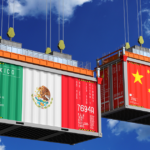
The Interoceanic Corridor of the Isthmus of Tehuantepec: A Golden Opportunity for Mexico

Legal

Mexico is on the verge of an impressive economic revitalization, thanks to the Interoceanic Corridor of the Isthmus of Tehuantepec (ICIT). This ambitious undertaking encompasses the revitalization of railroads, the modernization of highways, and the expansion of ports in Salina Cruz and Coatzacoalcos. It holds the promise of transforming the southern region of the country into a thriving global center for trade and manufacturing.

The primary purpose of the ICIT is to connect the Gulf of Mexico to the Pacific Ocean, opening a new trade route that will reduce transit times and transportation costs. This corridor is particularly beneficial to companies looking to relocate their operations closer to the United States markets, as it offers a strategic location and a range of unique advantages, including an abundant water supply.

To date, the ICIT has attracted investments totaling an astonishing $4.5 billion, coming from both domestic and foreign companies. These projects span a wide range of sectors, including electronics, semiconductors, automotive parts, pharmaceuticals, and petrochemicals. Furthermore, the ICIT has the potential to generate millions of jobs, attract foreign investments, and diversify the country’s economy. If executed efficiently, Mexico could become a global leader in trade and manufacturing.

Economic Benefits

The ICIT has the potential to make a significant economic impact on Mexico. The project is expected to create up to 100,000 direct jobs and 500,000 indirect jobs. Additionally, it is anticipated to attract foreign investments of up to $100 billion.

The ICIT also has the potential to diversify Mexico’s economy. The project focuses on sectors such as manufacturing, logistics, and tourism, which will help reduce Mexico’s dependence on oil and gas exports.

Social Benefits

The ICIT also has the potential to generate significant social benefits in Mexico. The project will help alleviate poverty and inequality in the southern region of the country. Furthermore, it will contribute to improving the connectivity and infrastructure of the region.

The Interoceanic Corridor of the Isthmus of Tehuantepec represents a golden opportunity for Mexico. This project has the potential to reshape the country’s economy and create a more prosperous future for the southern region. With the right commitment and efficient management, the ICIT could mark a milestone in Mexico’s economic revitalization and strengthen its position on the international stage.

Read More →

Networking in Mexico: Insights from a Nearshoring Expert

Nearshoring

Whether you’re advancing in your professional journey or climbing the corporate ladder, fostering strategic relationships acts as the driving force propelling your progress. In this article, we’ll delve into the world of networking in Mexico, offering insights from Roberto Castolo, the CEO of Semudmex and an experienced expert, regarding the best practices and challenges in this market.

Networking holds a pivotal role in the Mexican business landscape, serving as a gateway to forming strong professional relationships that can profoundly impact your career growth and opportunities. Below, we present effective strategies to optimize your networking efforts in Mexico:

Best Practices:

Industry Events:

Attend industry gatherings; they serve as hubs of opportunities where you can meet professionals in your field and gain valuable insights into current trends.

Professional Organizations:

Join industry-specific professional associations to expand your network and stay updated on the latest advancements in your domain.

LinkedIn Connections:

Leverage LinkedIn, a popular professional platform, to connect with key individuals in your industry, even if you haven’t met them in person. Engage strategically and showcase your expertise.

Requesting Introductions:

If you share mutual connections, consider requesting an introduction. A personal recommendation can facilitate the establishment of strategic relationships.

Professionalism Matters:

Demonstrate professionalism in your interactions, encompassing respectful and integrity-driven behavior and communication.

Key Considerations:

Cultural Respect:

Always honor Mexican cultural norms, which emphasize formality and courtesy. Understanding and adopting these customs will ensure smooth interactions.

Language Connection:

Learn some basic phrases in Spanish to convey your interest in Mexican culture and enhance the productivity of your conversations.

Sharing Your Professional Journey:

Mexicans are keen on learning about the professional experiences of others. Be prepared to discuss your career trajectory and accomplishments in the professional realm, fostering understanding and connection.

Exercising Patience:

Building relationships in Mexico requires time and patience. Avoid rushing the process; allow connections to strengthen organically.

Networking in Mexico is an effective technique for expanding your network of contacts. By investing time in establishing strategic connections and learning from best practices, you can navigate this realm successfully and build a solid network of contacts that will benefit both your professional growth and career trajectory in Mexico.

Read More →

Bridge of the Americas Reopens for Business

Economy

After a three-week closure, the Bridge of the Americas (BOTA) connecting Ciudad Juárez, Chihuahua, to El Paso, Texas, is once again open for cargo traffic. This decision was eagerly awaited by the business community. The United States Customs and Border Protection (CBP) has resumed cargo processing after temporarily suspending operations to assist in handling migrants crossing unofficial areas into the United States.


CBP has confirmed the reopening of the BOTA cargo facility on its regular schedule from 6 a.m. to 2 p.m., Monday through Friday, although with certain undisclosed operational adjustments.


Before the closure, BOTA processed approximately 500 northbound trucks daily. Despite the reopening, CBP continues to encourage the business community to explore other nearby facilities, such as the Ysleta, Marcelino Serna (Tornillo), and Santa Teresa ports.


However, it’s important to note that the BOTA closure and stringent truck inspections at other border crossings have caused significant delays for northbound trucks in recent weeks. The Mexican National Chamber of Trucking reported that over $1.5 billion worth of goods have been held at the Chihuahua-Texas border due to these rigorous inspections aimed at detecting illegal entries of migrants and narcotics.


Miriam Kotowski, President of Tecma Transportation Services, a logistics company that frequently uses commercial crossings between Ciudad Juárez and El Paso, is optimistic about the reopening of the Bridge of the Americas and how it will contribute to reduced crossing times. Nevertheless, she has highlighted that inspections by the Texas Department of Public Safety at other entry points are negatively impacting cross-border cargo traffic flow, considering them as trade impediments.


President López Obrador has expressed his intention to send a diplomatic communication to his U.S. counterpart expressing the Mexican government’s opposition to these truck inspections carried out by the Texas government. He asserts that these inspections harm both nations and affect economic activity and people’s mobility. The Mexican Ministry of Foreign Affairs (SRE) has communicated this concern to the U.S. government and requested the restoration of commercial flows through the affected border crossings. The Mexican government has reaffirmed its commitment to working towards fully restoring operations.


The reopening of the Bridge of the Americas is a positive step towards revitalizing trade between Mexico and the United States, and the business community enthusiastically welcomes this news. Nonetheless, challenges persist with rigorous inspections at other crossings, presenting an obstacle to the smooth flow of goods. The Mexican government is taking diplomatic measures to address this situation and ensure better commercial integration between both countries.

Read More →

Mexico and the U.S: A Shared Bet on Microchips

Economy

In the realm of international diplomacy, Mexico has played a strong card in its relationship with the United States: semiconductor production. Despite differing stances on matters like energy, corn, and labor, both nations are united in pursuit of a distinctive opportunity.

This strategy could strengthen the alliance between Mexico and the United States, allowing an expansion of their commercial and manufacturing relationship at a pivotal moment marked by the trade war with China and the global restructuring of manufacturing.

The invitation from the Joe Biden administration to the Andrés Manuel López Obrador government to join the microchip production plan is a significant milestone. Biden recently signed the Chips and Science Act, allocating $52 billion to boost chip manufacturing in the United States.

During a recent meeting in Washington, strategies were discussed to capitalize on this opportunity. The conversation centered on promoting investment in manufacturing, creating jobs, and fostering prosperity through these laws, which together allocate over $400 billion to strengthen regional microchip supply chains.

Raquel Buenrostro, Secretary of Economy, emphasized the importance of the microchip supply chain and its potential to have a positive impact on the economy of North America and the integration of the United States, Mexico, and Canada.

Recently, a Taiwanese delegation visited Mexico to explore investment opportunities in the Isthmus of Tehuantepec Interoceanic Corridor. Companies such as Chunghwa Telecom, Hon Hai Foxconn, and Delta Electronics showed interest in investing.

Although the details of the new microchip supply chain are still unclear, Armando Cortés Galicia, CEO of the INA, provided some insights. Mexico could focus on microchip programming and distribution in the region.

The COVID-19 pandemic has caused disruptions in production chains and accelerated the relocation of companies from China to other countries. In this context, Mexico has a strategic opportunity.

Despite existing differences, microchips represent a unique opportunity to strengthen the alliance between these two nations in the long run, promoting mutual benefit and contributing to regional development.

Read More →

Mexico’s Automotive Industry Shifts into High Gear

Logistics

In the midst of a challenging global economic landscape, Mexico continues to showcase its strength in the realm of exports, largely owing to the dynamism of the automotive sector. Preliminary data released by the National Institute of Statistics and Geography (INEGI) reveal a double-digit annual growth in automotive sector exports, fueling a robust year-over-year increase in Mexico’s total export value this year.

The value of exports saw a 3.8% annual increase in both August and the first eight months of the year. It’s worth noting that non-oil exports saw a rise of 4.3% last month and 5.8% between January and August.

During the last month, Mexico’s total exports reached a value of $52.36 billion, and between January and August, they amassed an impressive figure of $391.87 billion. Here, the manufacturing industry, including the automotive sector, significantly contributed to these achievements.

Manufacturing sector exports amounted to $47.15 billion last month and $348.95 billion in the first eight months of 2023, encompassing about 90% of the total value of Mexican exports in these respective periods. Annually, the value of manufacturing exports rose by 4.3% in August and 6% in the first eight months of the year.

Notably, the annual growth in the value of automotive exports was even more remarkable, with an 11% increase last month and a staggering 16.1% increase between January and August.

On another note, agricultural exports, including top earners like avocados and berries, experienced a 2.9% increase in the first eight months of the year, surpassing the $15 billion mark. Meanwhile, mining sector exports grew by 4.9%, reaching $6.35 billion.

Over 83% of non-oil export revenue came from shipping products to the United States, solidifying Mexico as the United States’ primary trading partner during the first six months of the year.

However, in contrast, the value of oil exports saw a 22% annual decline between January and August, amounting to $21.53 billion. This phenomenon is tied to Mexico’s goal of achieving energy self-sufficiency by 2024, opting to keep more crude for domestic processing rather than exporting it.

Regarding imports, preliminary data indicates a 4.3% annual decrease last month and a 0.5% decrease in the first eight months of the year. Imports were valued at $53.73 billion in August and $400.48 billion between January and that month, leaving Mexico with trade deficits in both periods.

Mexico’s deficit was $1.37 billion last month, a 75.9% reduction compared to that recorded in August last year, while its January-August deficit was $8.6 billion, a 65.2% reduction compared to that for the same period of 2022.

The majority of Mexico’s import spending was on intermediate goods, products used as inputs in the production of other goods. The value of imports of intermediate goods was $305.63 billion in the first eight months of the year, a 3.8% decline compared to the same period of 2022.

Imports of consumer goods rose 5.9% to $57.1 billion, while oil imports declined 26.8% to $12.93 billion. Mexico spent $37.74 billion on capital goods such as machinery, tools, and heavy equipment in the first eight months of the year, a 22.5% increase compared to 2022.

In conclusion, Mexico continues to demonstrate its ability to sustain steady growth in exports, with the automotive sector being a key driver of this momentum. With a clear strategy towards energy self-sufficiency and efficient management of its imports, Mexico aims to maintain its position as a key player in international trade and continue contributing to economic growth on both a national and global scale.

Read More →

The Nearshoring Challenge in Mexico: Infrastructure and Energy Regulation

Nearshoring

Nearshoring, a practice where companies relocate their operations to countries close to their major markets, has had a lasting impact on the global business landscape, bringing exciting investment opportunities and economic growth to nations. Mexico, with its strategic location and skilled workforce, finds itself at the epicenter of this global trend. However, a significant challenge that urgently needs addressing is the country’s regulatory framework concerning energy and its infrastructure.

Regulatory Obstacles

Efficient regulation and adaptation of transformers and industrial materials are crucial for the nearshoring process, especially in collaboration with entities like CFE and CENACE. However, the administrative process required to execute these procedures is notably bureaucratic and slow. With wait times of up to two months for processing and an additional two to three months for a response, accompanied by an extensive list of requirements, the process becomes a bureaucratic maze that hampers the execution and acquisition of necessary permits.

Infrastructure Hurdles

Another substantial challenge is the insufficient infrastructure, particularly in the electrical sector. To successfully carry out nearshoring, Mexico needs a robust and dependable electrical infrastructure to support companies’ operations. Unfortunately, Mexico’s electrical infrastructure falls short at the moment. The country grapples with frequent power outages and blackouts, which can have a devastating impact on businesses.

Overcoming the Obstacles

To fully capitalize on the nearshoring trend, Mexico must urgently tackle the regulatory and infrastructure challenges it confronts.

Streamline and simplify regulatory processes. Authorities need to streamline the permit and license acquisition process for nearshoring companies. This can be achieved by reducing the number of necessary steps, automating the process, and enhancing its transparency and efficiency.

Invest in electrical infrastructure. The Mexican government needs to make substantial investments in expanding and upgrading its electrical infrastructure. This will ensure that nearshoring companies have a reliable power supply essential for efficient operations.

Provide training and support for electronic infrastructure.

The government should also invest in training programs to cultivate the skills needed to operate and maintain electronic infrastructure. This will aid in improving the efficiency of regulatory processes and alleviate the burden on businesses.

Conclusion

Nearshoring in Mexico holds the potential to generate significant economic benefits for the country. However, to fully unlock this potential, Mexico must address the regulatory and infrastructure challenges it confronts. By urgently taking action to simplify regulations, invest in infrastructure, and provide training and support, Mexico can position itself as a global leader in nearshoring.

Read More →

Boost and Advantages for Mexico in the Global Context

Nearshoring

In an increasingly globalized world, nearshoring has become a key strategy for Mexico. Although closely linked to geographical proximity to the United States, our main trading partner, it is important to diversify both clients and suppliers to remain competitive. Mexico has a significant advantage as the seventh country with the most free trade agreements in the world, allowing it to explore opportunities beyond the US market.

While nearshoring does not apply in terms of geographical proximity to Europe, we are a relevant market, especially in the current context of global industrial relocation. However, we still heavily rely on cheap labor, which places us in a competitive position compared to European countries, the United States, or Israel. Mexico stands out as a supply chain generator, but this is just the first step in our journey to becoming a global player, not just local. To achieve this, we must add technological value to our production chain and contribute not only to wealth generation but also to the well-being of emerging markets throughout the Americas.

The Role of Nearshoring in Mexico

Nearshoring has been a fundamental strategy for Mexico due to its geographically close location to the United States. For decades, US companies have chosen to move part of their production to Mexico to take advantage of the benefits of lower labor costs and proximity to their main market. This has allowed Mexico to develop a strong manufacturing industry and become one of the largest exporters in the region. However, relying solely on the US market presents risks such as economic volatility and changing trade policies. That is why diversifying clients and suppliers is crucial to maintaining competitiveness and sustainable growth.

Market Diversification

Despite nearshoring being closely related to the United States, Mexico has leveraged its extensive network of free trade agreements to diversify its markets. Currently, Mexico has trade agreements with more than 50 countries, granting it preferential access to a wide range of international markets. This diversification has allowed Mexican companies to expand their global reach and reduce their dependence on a single market.

Global Opportunities

Although geographical proximity does not play a significant role in nearshoring towards Europe, Mexico has a competitive advantage in terms of labor costs. As more European companies seek to reduce production costs and shorten supply chains, Mexico has positioned itself as an attractive destination. Mexican labor remains competitive compared to European wages, providing opportunities to establish trade partnerships and strengthen commercial relations with European countries.

Adding Technological Value

While cheap labor has been an important factor in Mexico’s economic growth, it is crucial for the country to evolve towards generating technological value. This involves adopting advanced technologies, improving training and education in technical areas, and promoting innovation in production processes. By adding technological value to our production chain, Mexico will be able to compete in more demanding international markets and ensure sustainable long-term economic growth.

Impact on the Well-being of Emerging Markets

The success of nearshoring in Mexico is not only measured in terms of wealth generation but also in its ability to generate well-being in emerging markets throughout the Americas. By establishing trade partnerships and fostering economic development in neighboring countries, Mexico can contribute to regional growth and stability. This includes knowledge and technology transfer, job creation, and promoting social inclusion and sustainable development in recipient communities.

In conclusion

Nearshoring has been a significant boost for Mexico in the global context. While geographical proximity to the United States has been a key factor, diversifying clients and suppliers, as well as pursuing opportunities in Europe, have strengthened Mexico’s competitive position. However, to remain relevant in an increasingly technological world, it is necessary to add technological value to our production chain. By doing so, Mexico will not only generate wealth but also contribute to the well-being of emerging markets throughout the Americas, fostering sustainable economic growth and regional stability.

Read More →