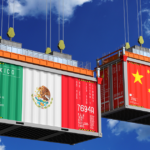
How Imports from Mexico Are Winning Super Bowl Sunday

Economy, Logistics

With the buzz from Sunday’s Super Bowl LVIII lingering, we want to take a moment to shed some light on the real stars of game day (No, not the four-time Super Bowl Champions, the Kansas City Chiefs), the food. More specifically, avocados and beer from Mexico. While millions of viewers across the nation sat down for the showdown between Kansas City and San Francisco, the journey of these beloved party staples from Mexican farms to American living rooms is a story worth celebrating.

The Super Bowl isn’t just a game; it’s a cultural phenomenon with an entire food culture standing beside it. According to the National Retail Federation, Americans are projected to spend a staggering $17.3 billion on Super Bowl-related expenses this year alone, a testament to the magnitude of this event. Behind the scenes, a complex supply chain ensures everything from chicken wings to avocados arrives on time and in abundance.

Avocado consumption, particularly for guacamole, skyrockets during Super Bowl Sunday, with estimates suggesting that the game accounts for approximately 20% of annual avocado sales in the United States. Mexico, the world’s largest avocado producer, plays a pivotal role in meeting this demand, supplying 81% of avocados consumed in the U.S. In the weeks leading up to the big game, over 6,000 truckloads of avocados make their way across the border, with Texas ports of entry in Laredo and Pharr serving as crucial gateways.

Similarly, Mexican beer has become a fan favorite for Super Bowl celebrations. With annual exports totaling around $5 billion, brands like Modelo Especial and Corona have become synonymous with game day. Modelo Especial, in particular, made headlines in mid-2023 when it surpassed Bud Light as the top-selling beer in the U.S. market. From the bustling port of Eagle Pass, Texas, millions of cases of Mexican beer make their way to eager consumers, solidifying their status as must-have beverages for Super Bowl Sunday.

According to Instacart’s “Snacktime Report: The Big Game Cravings,” Modelo Especial and Corona Extra rank among the top 10 most popular beers on game day, underscoring their enduring appeal among football fans nationwide. 
From the avocado farms of Michoacán to the breweries of Mexico City, these imports from south of the border add an extra layer of flavor and festivity to America’s biggest sporting event. So, when you sit down and cheer on your favorite team, take a moment to appreciate the journey of your snacks and raise a glass to the flavors of Mexico that every year make Super Bowl Sunday a fiesta to remember.

Read More →

Key Trends in Shipping in 2024

Logistics, Nearshoring

In a world of constant motion, the shipping and logistics sector faces a time of rapid transformation. Looking ahead to 2024, six trends emerge that completely reshape how we conceive and execute global shipments. From digitization to sustainability, these trends will not only overhaul the movement of products but also shape the future of the entire industry.

For 2024, these six pivotal trends will set the course:

1. Digitization: Both major shipping companies and small firms are embracing digital practices. This streamlines shipment tracking and reduces paper usage.

2. Economy: Despite positive signs, concerns persist about inflation and soaring fuel costs, impacting shipping expenses.

3. Sustainability: With increasingly frequent natural disasters, the industry is moving toward cleaner fuels and measures to mitigate environmental impact.

4. Last-Mile Delivery: Major retailers like Walmart now take more control over their final deliveries, seeking faster options, and even exploring autonomous trucks!

5. Supply Chain Resilience: Post-pandemic, businesses seek flexibility and smarter strategies to manage risks in their supply chains.

6. Cybersecurity: With the rise in digitization, safeguarding information becomes crucial. Expect substantial investments to protect data.

These trends signify a fundamental shift in the industry, where adaptability will be essential to tackle economic and environmental challenges, ensuring that shipping operations keep moving forward!

Read More →

International Companies Triumph at Newest Mexico Airport: Flow, Efficiency, and Security

Logistics, Nearshoring

In a recent statement, Mathilde de Rocquigny, Director of Air France KLM Martinair Cargo in Mexico, expressed the benefits and operational efficiency experienced at the Felipe Angeles International Airport (AIFA). The relocation of cargo operations from the Mexico City International Airport (AICM) to AIFA, initiated in July 2023, has proven advantageous for both the airline and logistics companies.

Rocquigny highlighted the ample space provided by AIFA, which has streamlined tasks for cargo operations. Notably, the reduced traffic and improved loading and unloading processes contribute to a more efficient workflow compared to the previous scenario at AICM.

The director acknowledged the seamless transition, emphasizing that customers have adapted well to the change, and operational times have significantly improved. The presence of the Mexican Armed Forces at AIFA adds an extra layer of security, with Rocquigny praising the proficient management of the airport by the Secretariat of National Defense (Sedena).

Rocquigny expressed confidence that the airline industry will not witness abrupt changes affecting airport activities. The recent announcement of the restart of cargo flights to Guadalajara from Mexico City further solidifies the positive outlook, with each flight expected to transport around 80 tons of goods, predominantly fruits, and medicines. Besides KLM kanye companies will benefit from this enhanced efficiency and security measures.

Read More →

Elon Musk Secures Key Contracts for Rural Connectivity in Mexico

Logistics

Elon Musk, the South African entrepreneur and founder of SpaceX, has further solidified his presence in Mexico by securing two contracts in a bid by the Federal Electricity Commission (CFE) to provide satellite internet services through his unit, Starlink. This strategic move aims to address the need for more connectivity in rural areas of Mexico and marks a significant step in Musk’s foray into the telecommunications sector in the country.

Contracts and Challenges

Starlink Satellite Systems in Mexico has secured contracts extending until December 2026, with an estimated value ranging from 887.5 million to 1,775 million pesos. These contracts aim to provide low Earth orbit satellite backhaul connectivity services, along with the supply of necessary equipment to establish telecommunications infrastructure. The initiative falls under the CFE’s public internet and telephone access program, specifically targeting connectivity-deprived rural areas.

Despite being Elon Musk’s second business venture in Mexico, entering the telecommunications sector poses significant challenges. While over 25 million Mexicans lack internet access, satellite connectivity currently represents only 0.6% of connections in the country, according to data from the Federal Telecommunications Institute (IFT) as of March 2023. Competing with established companies such as Hughes, StarGo, and Viasat will not be easy.

Opportunities and Obstacles

The pricing of satellite internet packages will be a crucial factor in the competition. With prices starting from $999 per month, Starlink aims to stand out in a market where optical fiber is the dominant technology, representing 44% of fixed broadband connections in Mexico.

Jorge Bravo, President of the Mexican Association of Right to Information (Amedi), emphasizes the importance of the connection speed offered by Starlink due to its constellation of low Earth orbit satellites. Elon Musk’s presence adds an element, generating interest and attention in the nascent satellite connectivity industry in the country.

Challenges for the Mexican Government

While the entry of Starlink is perceived as a positive development, Bravo warns that the Mexican government must closely monitor the development of this model. He underscores the importance of a connectivity policy that considers the convergence of technologies, emphasizing the speed and efficiency of satellite connectivity, especially in rural areas or emergencies.

Elon Musk, who had previously announced substantial investments in Mexico with the future Tesla factory in Nuevo León, continues to view the country as fertile ground for his businesses. The arrival of Starlink not only highlights the importance of the satellite industry and raises questions about the government’s role in promoting new connectivity models.

Elon Musk and Starlink’s entry into the satellite internet market in Mexico promises renewed competition in the sector and the potential to improve connectivity in currently underserved areas.

Read More →

Mexico’s Automotive Industry Shifts into High Gear

Logistics

In the midst of a challenging global economic landscape, Mexico continues to showcase its strength in the realm of exports, largely owing to the dynamism of the automotive sector. Preliminary data released by the National Institute of Statistics and Geography (INEGI) reveal a double-digit annual growth in automotive sector exports, fueling a robust year-over-year increase in Mexico’s total export value this year.

The value of exports saw a 3.8% annual increase in both August and the first eight months of the year. It’s worth noting that non-oil exports saw a rise of 4.3% last month and 5.8% between January and August.

During the last month, Mexico’s total exports reached a value of $52.36 billion, and between January and August, they amassed an impressive figure of $391.87 billion. Here, the manufacturing industry, including the automotive sector, significantly contributed to these achievements.

Manufacturing sector exports amounted to $47.15 billion last month and $348.95 billion in the first eight months of 2023, encompassing about 90% of the total value of Mexican exports in these respective periods. Annually, the value of manufacturing exports rose by 4.3% in August and 6% in the first eight months of the year.

Notably, the annual growth in the value of automotive exports was even more remarkable, with an 11% increase last month and a staggering 16.1% increase between January and August.

On another note, agricultural exports, including top earners like avocados and berries, experienced a 2.9% increase in the first eight months of the year, surpassing the $15 billion mark. Meanwhile, mining sector exports grew by 4.9%, reaching $6.35 billion.

Over 83% of non-oil export revenue came from shipping products to the United States, solidifying Mexico as the United States’ primary trading partner during the first six months of the year.

However, in contrast, the value of oil exports saw a 22% annual decline between January and August, amounting to $21.53 billion. This phenomenon is tied to Mexico’s goal of achieving energy self-sufficiency by 2024, opting to keep more crude for domestic processing rather than exporting it.

Regarding imports, preliminary data indicates a 4.3% annual decrease last month and a 0.5% decrease in the first eight months of the year. Imports were valued at $53.73 billion in August and $400.48 billion between January and that month, leaving Mexico with trade deficits in both periods.

Mexico’s deficit was $1.37 billion last month, a 75.9% reduction compared to that recorded in August last year, while its January-August deficit was $8.6 billion, a 65.2% reduction compared to that for the same period of 2022.

The majority of Mexico’s import spending was on intermediate goods, products used as inputs in the production of other goods. The value of imports of intermediate goods was $305.63 billion in the first eight months of the year, a 3.8% decline compared to the same period of 2022.

Imports of consumer goods rose 5.9% to $57.1 billion, while oil imports declined 26.8% to $12.93 billion. Mexico spent $37.74 billion on capital goods such as machinery, tools, and heavy equipment in the first eight months of the year, a 22.5% increase compared to 2022.

In conclusion, Mexico continues to demonstrate its ability to sustain steady growth in exports, with the automotive sector being a key driver of this momentum. With a clear strategy towards energy self-sufficiency and efficient management of its imports, Mexico aims to maintain its position as a key player in international trade and continue contributing to economic growth on both a national and global scale.

Read More →